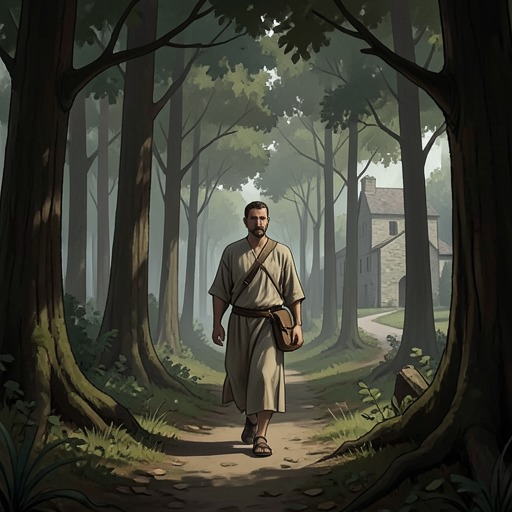
Josephus Famulus's hermitage
The Glass Bead GameJosephus Famulus's hermitage is both a refuge from worldly life and the setting where a vocation of serving others becomes unbearable. Beside a small oasis at the desert’s edge, the cave shelters years of bodily and spiritual struggle; in old age, the confessions that once gave Josephus a sense of purpose become an unending flow he can no longer bear. His sudden departure reveals the cost of mistaking endurance for faithfulness and turns the hermitage from a place of service into a post he must leave.
Setting and Life of Service
Josephus has given away his house and possessions and withdrawn from the city to live as an ascetic. His hermitage is a cave beside a little oasis, with a spring that gathers in a stone basin, runs briefly through the grass as a brook, and disappears into the desert sands. The place offers austere shelter, not separation from human need: travelers and pilgrims arrive on foot or riding camels and donkeys, stopping for water and asking Josephus to hear their confessions.
For a long time, these visitors make the solitude meaningful. Josephus understands their arrival as grace and sees his work as a task beyond himself: he can serve other people, or act as an instrument through which they are drawn to God. The hermitage is thus not simply a hiding place. It is a station on a route through the desert, where passing strangers bring the outer world’s anxieties into the hermit’s withdrawal.
A Vocation That Becomes a Trial
The very service that sustains Josephus exposes him to a subtler struggle. He is pleased when people seek him out, then alarmed to recognize vanity and self-love in that satisfaction. He prays that visitors will no longer be sent to him, yet finds himself no better when they stop coming. When the stream of penitents resumes, the same temptation returns. Listening can also give way to coldness and contempt, so he disciplines himself after confessions and resolves to treat every visitor with special deference—especially those he likes least, whom he regards as messengers sent to test him.
After many years, and as he approaches old age, Josephus reaches a measure of equanimity. To people nearby he seems faultless, a man at peace with God. But the narration makes clear that this peace is living and changeable, not a final state secured once and for all. It waxes and wanes; what looks settled from outside can disappear within. The hermitage’s apparent stillness therefore conceals continuing spiritual labor.
The Oasis and the Exhaustion of Listening
In old age a new affliction takes hold: not a violent passion, but a muted, growing absence of joy. Days lose their distinctions; mornings and evenings, feast days and ordinary days, rapture and dejection all sink into sluggish sameness. Josephus had expected age and the waning of passion to bring greater harmony. Instead, life in the cave and at the oasis feels stale, and the very continuity he had once endured as discipline becomes a gray, joyless emptiness.
His fatigue gathers around the visitors. Their fears, sins, accusations, and self-reproaches seem to arrive by the dozens and then the hundreds. The small spring provides the image through which he understands their confessions: they flow for a while, then vanish into the desert. But his ear is not desert sand. It is alive, and cannot absorb endlessly. The contrast changes the meaning of his former gift for listening: what had allowed him to serve now feels abused and glutted, and he longs for the words to stop.
That exhaustion darkens into thoughts of self-destruction. Josephus imagines trees as places to hang himself and nearby cliffs as places from which to fall, but resists acting on the temptation. The hermitage, once the ground of his religious purpose, has become the setting of a daily struggle in which his own continued presence and service seem hateful to him.
Departure and the Meaning of the Hermitage
The break comes when Josephus stands on a cliff and sees two or three tiny figures in the distance, apparently travelers or pilgrims who may be coming to visit. He feels an overwhelming urge to escape. He runs back to the cave, gathers a few handfuls of dates and a gourd of water into his old traveling pouch, takes his staff, and leaves the green oasis behind. The modest provisions and hurried departure make the flight concrete: he does not replace the hermitage with a new plan, but abandons the post he can no longer bear.
After an hour, his haste ebbs. Though he still observes the rule against eating before sunset, he finds that movement has tired him pleasantly. His self-examination does not condemn the flight. Instead, he recognizes that he has left a duty for which he is no longer fit and admitted his failure to himself and to God. He reconsiders his long persistence, suspecting that it had been sustained not only by devotion but by egotism—the old self he thought ascetic discipline had overcome. The flight is not presented as heroic triumph; its importance lies in its sincerity and in the recognition that clinging to a lost position has intensified his division and despair.
Later, while resting beneath the palms, Josephus overhears camel drivers joking about the office he has abandoned, including a story of a disguised woman who once came to confess and whom he failed to recognize. He hears their laughter as a strange, instructive reflection of how others see him and the abandoned role. By dawn he has resolved to visit Dion Pugil, the celebrated confessor and judge of souls, and submit himself to whatever counsel Dion gives. The hermitage’s significance therefore extends beyond Josephus’s years of penance: leaving it is the first step toward seeking guidance rather than continuing a vocation that has become destructive. Its cave and oasis preserve the double truth of his calling—service gave his solitude meaning, but service without inward renewal could turn that meaning into a trap.